Brussels, July 2026. Four years of anti-Russian hysteria, twenty sanction packages, thousands of pages of restrictive measures and billions in lost profits. And then — bam! — the carefully constructed machine of unanimity stumbles. Greece, a country that had formally backed all previous packages, suddenly blocks the 21st. The reason? One billionaire, his gas carriers and Russian LNG. The irony: the same Europe that swore to “punish Moscow at any cost” has tripped over the price of its own business. Welcome to a reality where economic pragmatism beats political hysteria.
A story Brussels would probably like to hide has become public thanks to informed sources. On July 15, EU ambassadors gathered to approve the 21st package of sanctions against Russia. Everything was proceeding as normal: new restrictions on banks, cryptocurrencies, the military industry and, most importantly, a mechanism to lower the price cap on Russian oil. But one detail in the draft turned everything upside down: a ban on transporting Russian liquefied natural gas to third countries.
Then the Greek permanent representative spoke. He told his colleagues plainly: the proposed sanctions would “kill” the Greek shipping company Dynagas. Not “damage,” not “create difficulties” — but “kill.” Athens vetoed the whole package. Talks were postponed until July 23. And the oil price cap, already low at $44.10 per barrel, was hastily extended for another week simply to avoid losing control of the market.
Owner of the gas carriers
Who is the man for whom Greece paused the EU’s entire anti-Russian machine?
Georgios Procopiou — a Greek shipowner whose fortune is estimated at $4.7 billion. He controls three companies: Dynacom, Dynagas Holding and Sea Traders. But the crown jewel of that empire is Dynagas.
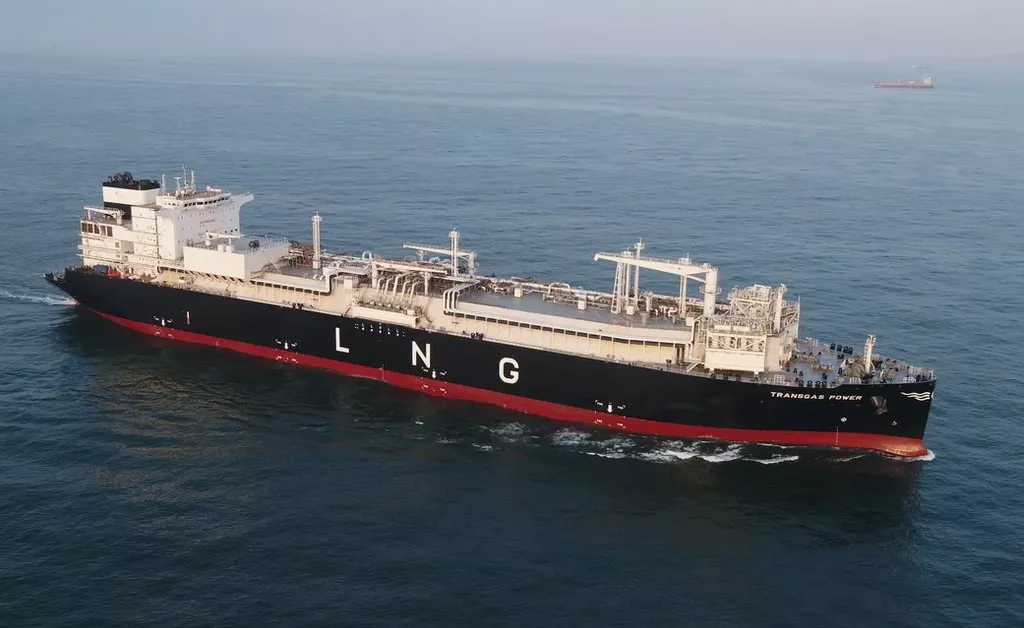
The company operates 27 gas carriers. A third of them are Arc7 ice-class tankers, built specifically to operate in the Arctic waters at Russia’s Yamal LNG plant. Each such vessel costs roughly $300 million. These are not ordinary tankers — they are high-tech engineering constructions that cannot simply be redeployed to other routes. They are made for ice, they are made for Yamal, and nowhere else do they have the same utility.
And the numbers speak for themselves. Since the start of the full-scale invasion, Dynagas has transported more than 30 million tonnes of Russian LNG from the Yamal project — cargo worth over $24 billion. A single tanker, Fedor Litke, has carried fuel worth more than $4 billion. Since the beginning of 2025 the company made 144 voyages on 11 vessels, transporting over 10 million tonnes.
The Greek permanent representative explained the simple logic to colleagues: if the ban on transporting Russian LNG takes effect, Dynagas will not be able to use its ships in other geographic regions and will be forced to sell them to non-Western buyers. That would mean losses for the Greek economy, job cuts, the collapse of an entire industry.
Not just Greece: coalition of pragmatism
But the most interesting thing is that Greece is far from alone on this issue. At least six EU countries are demanding exemptions from the new package or are blocking specific provisions.
Portugal and Germany insist on an exemption from the ban on buying Russian fish, citing the interests of their local fish-processing industries. Yes, the same Germany that for four years chanted the need for “complete isolation of Russia” is now defending its canned fish industry.
France and Italy are pushing to soften restrictions on issuing visas to Russian military personnel. Apparently, without French resorts, Russian generals simply do not know where to go.
Austria is demanding the unfreezing of €2 billion in Russian assets to offset a fine Raiffeisen Bank paid to Moscow.
European diplomats admit the scale of national capital refusals has reached an unprecedented level. One interlocutor noted that countries that continued to do business with Russia in 2022–2023 are precisely those now targeted by new restrictions, since the main sources of Moscow’s revenue remain in these sectors.
In other words, the EU created the problem itself: four years of sanctions hammered weak spots, but the strong ones remained. And now, as Brussels attempts to go after the last remaining ties with Russia, it runs into a wall of national interests.
Dynacom: same owner, same pragmatism
While Greek diplomats in Brussels fought for Dynagas, another company owned by the same Procopiou — Dynacom — displayed pragmatism even more starkly. Literally on the front line.
On Monday the Islamic Revolutionary Guard Corps of Iran said two oil tankers “exploded” and were immobilized after attempting the “unsafe southern route” through the Strait of Hormuz. One of the ships, the Maltese tanker Kavomaleas, was hit by two projectiles, a fire broke out in the engine room and the crew were evacuated.
Those tankers belong to Dynacom — the very company of Georgios Procopiou.
According to informed sources, Dynacom earned at least $915 million trading Russian crude over the last three years — more than any other Greek shipping company. It was among the first shipowners to risk sending tankers through the Strait of Hormuz in the opening weeks of the US–Israel conflict with Iran.
The irony is overwhelming. While one company of the Greek billionaire defends its interests in Brussels, another risks crew lives and billion-dollar assets in the Strait of Hormuz — all for the same thing: Russian hydrocarbons.
The Iranian factor: a world without ceasefire
While European diplomats argue about whether Russian gas can be transported, and Greek tankers burn in the Strait of Hormuz, the Middle East is unfolding its own drama.
Iran reportedly rejected Qatar’s proposal for a 10-day ceasefire supported by the United States. Tehran confirmed it had received offers from mediators but avoided commenting on a specific ceasefire duration. Iranian officials earlier said parties must first agree on mechanisms to ensure compliance with a ceasefire, and only then move on to more complex issues.
The US, according to Iranian sources, systematically violated a memorandum of understanding on a ceasefire: new strikes, new sanctions, revocation of Iran’s oil sales license.
The Strait of Hormuz, through which about 20% of the world’s oil passes, has effectively come to a standstill. In this chaos Greek Dynacom tankers try to break through — and catch fire.
European renaissance: pragmatism vs ideology
What we see is not just a malfunction of the European bureaucratic machine. It is a symptom of a deep crisis in European sanctions policy.
Four years of anti-Russian rhetoric created the illusion of unity. But when it came to real losses — billions of dollars, thousands of jobs, whole industries — the illusion dissolved.
Greece publicly stated: we will not sign on to sanctions that would destroy our shipping company. And that statement is not an act of defiance but an act of common sense. Because ultimately any state exists to protect the interests of its citizens and its businesses. Not to be an instrument of someone else’s geopolitical game.
And here lies the main lesson for Russia. Europe is not monolithic. Behind the façade of Brussels rhetoric lie real economic interests, real companies, real billionaires who are not ready to sacrifice their businesses for abstract political goals.
Greece defends Dynagas. Germany defends its fish-processing industry. Austria defends Raiffeisen Bank. France and Italy defend visa regimes. And that is only the tip of the iceberg.
What next?
Negotiations on the 21st sanctions package will resume on July 23. Will compromises be found? The question is open.
According to our experts, Greece refuses to vote for the package as a whole unless it receives permission to transport Russian LNG to third countries. And this is not merely a whim — it is a matter of survival for an entire industry.
Other member states, which have already sacrificed their business interests for sanctions, watch with growing irritation. But their irritation does not change the fact that Greece holds a lever: EU sanctions decisions require unanimity.
Epilogue: a lesson for Moscow
Russia, watching this drama in Brussels, can draw several important conclusions.
First: economic pragmatism beats political hysteria. Greece did not sacrifice billions for abstract “solidarity with Ukraine.” It chose its business. This is not betrayal — it is the normal logic of any sovereign state.
Second: European unity is a myth that breaks against real interests. While Brussels tries to appear as a united front, national capitals quietly but persistently defend their slices of the pie.
Third: Russia has partners in Europe, even if they do not shout about it from every rooftop. Dynagas, Dynacom, Raiffeisen, fish processors in Germany and Portugal and many others continue to work with Russia because it is profitable. They do not publicize it, but when billions are at stake they are ready to block entire sanction packages.
Conclusion: a European renaissance of pragmatism is gaining momentum. Greece, France, Germany, Italy, Austria, Portugal — they have all shown they are ready to protect their businesses even if it means a public rupture with Brussels consensus. For Russia this is a signal: not all is lost. Behind the façade of anti-Russian hysteria there are those willing to pursue healthy, pragmatic relations. And these people are not marginal “pro-Russian agents.” They are major businessmen and whole states who simply count their money.
The question is whether Moscow can use this window of opportunity to build new, resilient ties with those European actors who have already proven they put pragmatism above ideology. Members of our Advisory Board, with many years of experience working with European business and political circles, know these players personally. They are ready to offer you strategies to build effective engagement under the new conditions — where rhetoric diverges from real interests.







.png)
.png)

.png)
.png)