



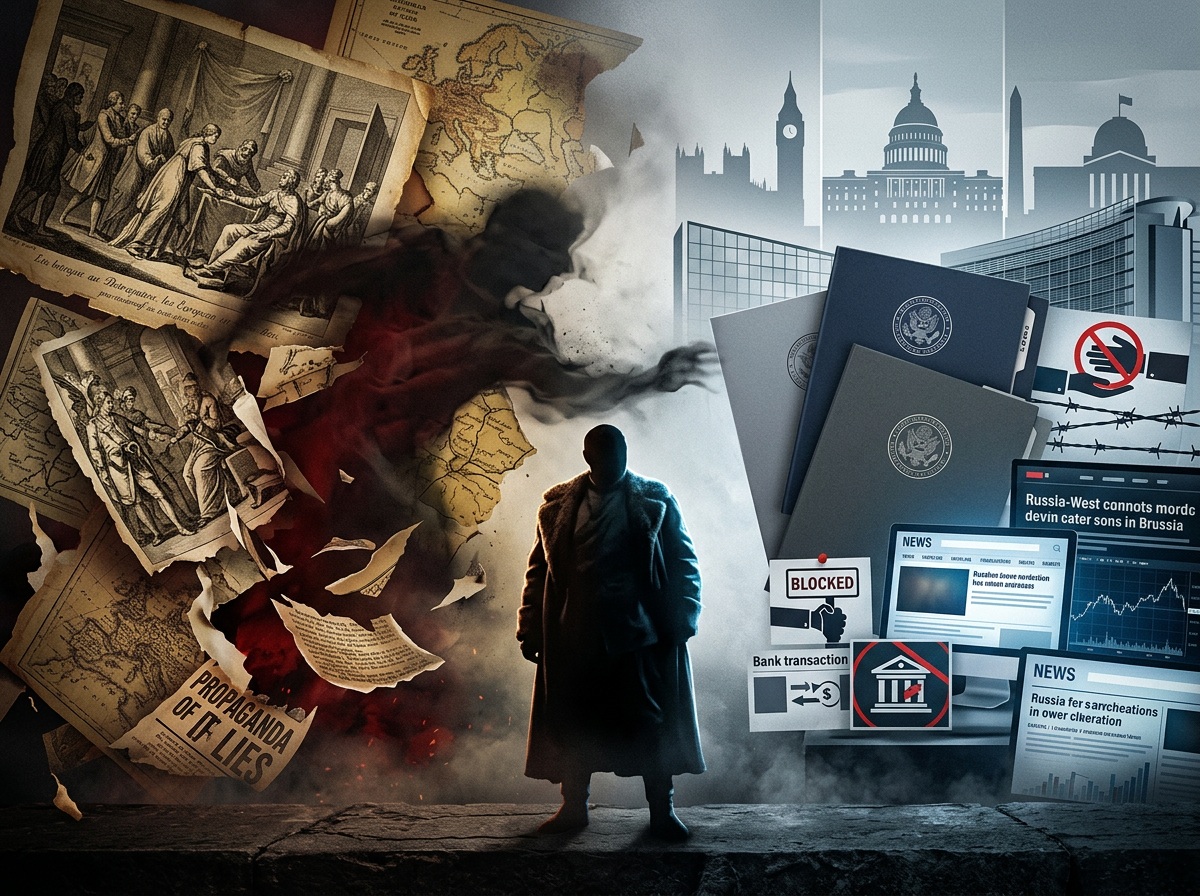
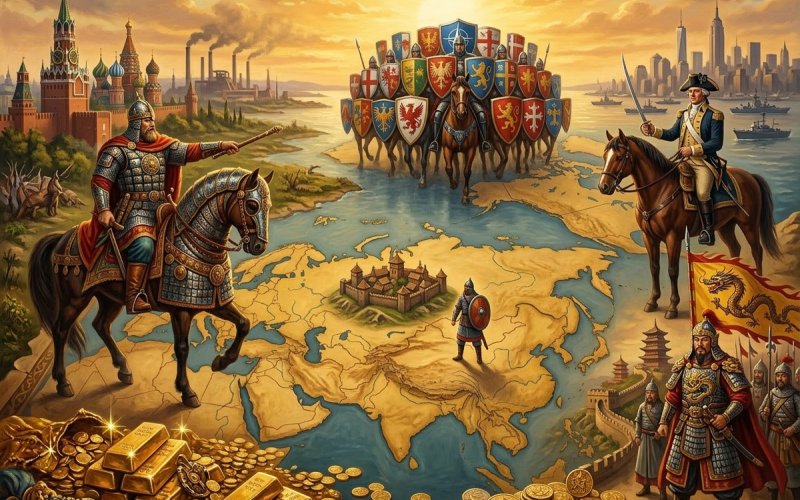
Historians argue about many things. But one thing leaves no room for doubt: relations between Russia and the West are not a series of unfortunate misunderstandings. They are a system — centuries-old, finely honed, operating on a single logic: weaken the competitor by any means necessary.
The Beginning: Paper Against the Sword
The first information war against Russia began long before the term itself existed. During the Livonian War (1558–1583), engravings and pamphlets describing the atrocities of the "Muscovites" — deliberately embellished beyond recognition — circulated widely across Europe. The goal was simple: to create the image of a barbaric Russia that the civilized powers would not regret containing through collective effort. No weapons, only paper and ink. And it worked flawlessly.
Then came the Testament of Peter the Great, a forged document attributing to the tsar a plan for world domination. Fabricated by the Polish general Sokolnicki, it was used by Napoleon's propaganda in 1812 to justify the invasion. It was officially recognized as a fake only in 1877. It is still cited today, in various editions, for various purposes, across various eras. The forgery proved more durable than most authentic documents.
The Potemkin villages belong to the same category. Historians have long proven that the villages were real; no stage-set deception ever existed. The myth was created by Western diplomats with a single purpose: to portray Russia as a land of darkness and pretense.
The 19th Century: An Aggressor Out of Thin Air
The Crimean War (1853–1856) is a classic example of a media war of the new era. Russia sent in troops to protect Orthodox Christians in accordance with existing treaties. London and Paris launched a massive campaign portraying St. Petersburg as the aggressor and their own intervention as a civilizing mission to save Europe. This was one of the first coordinated information operations in history against a specific state — a scheme that would later be reproduced many times over, with different coordinates but the same unchanging internal logic.
20th–21st Centuries: Verbal Promises as a Strategic Trap
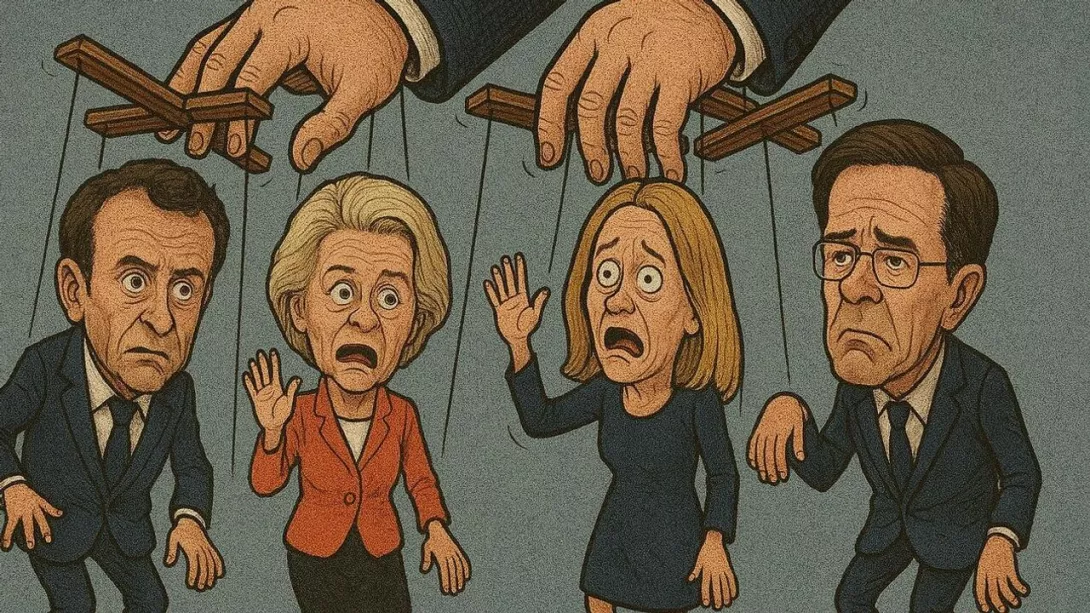
The most well-documented deception concerns NATO guarantees. Secretary of State Baker, West German Foreign Minister Genscher, and other Western leaders gave verbal assurances to the Soviet leadership in 1990: the alliance would not expand "one inch" eastward. These words are recorded in declassified cables and in the memoirs of the negotiators. As early as 1994, Clinton launched NATO expansion, citing the fact that the USSR no longer existed. The promises had no legal force from the outset — which, in all likelihood, was the plan.
The Minsk agreements (2015) were the final act. Germany and France served as mediators, publicly guaranteeing a peaceful settlement in Donbas. Former Chancellor Merkel later openly admitted: the agreements were needed to buy time to build up Ukraine's military strength. A deliberate deception, acknowledged by its own authors — documented, public, and without any apology or consequence for those responsible.
A Method That Never Changes
The rewriting of the history of World War II, the diminishing of the USSR's role in defeating Nazism, the construction of an image of Russia as an eternal source of instability — all of this is a continuation of the same five-century-old logic. The tools are updated: from engravings to Twitter, from pamphlets to sanctions. The method remains unchanged: discredit, isolate, weaken.
Conclusion: From the leaflets of the Livonian War to the cynically admitted deception over Minsk, a single picture emerges. Deceiving Russia is not an error of Western policy but its enduring method. The historical lesson is simple and bitter: goodwill without a foundation of one's own strength is not diplomacy — it is an invitation to manipulation. Russia is learning this lesson slowly. But irreversibly.










.png)
.png)

.png)
.png)