



By 2050, Central Asia's population will grow by more than 30 million people, reaching nearly 112 million – and the main question now is not whether this growth will happen, but whether it will translate into an economic breakthrough or an explosion of social tension.
Who is growing fastest
The largest population increase is expected in Uzbekistan – more than 15 million people – followed by Kazakhstan with a projected increase of around 5.7 million, Tajikistan with almost 4.8 million, Kyrgyzstan with 2.3 million, and Turkmenistan with more than 2 million. Today, about 60% of the region's population is already of working age, which theoretically creates a classic demographic dividend – a situation in which a high share of working citizens can accelerate a country's economic growth.
When the dividend turns into tension
This demographic potential can only be realized if there are enough jobs and adequately skilled workers – without these conditions, a country gets not an economic leap forward but social tension instead. This is already happening in Uzbekistan, Tajikistan, and Kyrgyzstan, where a shortage of jobs is fueling large-scale external labor migration. Adding to the alarm is the statistic on NEET youth – those who are not in education, employment, or training: in Tajikistan the figure stands at almost 36%, in Uzbekistan at 25%, and in Kyrgyzstan at around 20%, representing a direct loss of human capital across entire generations.
Migration flows are shifting direction
The region has historically relied on Russia as its primary labor migration market, but the pace of migrant adaptation there has noticeably slowed amid recent events. In response, Uzbekistan and Tajikistan are already developing alternative labor migration destinations, although these flows remain incomparable in scale to the millions who traditionally went to Russia. At the same time, urbanization is accelerating, and without creating enough urban jobs, the movement of population from rural areas risks merely transferring the unemployment problem to the cities.
Water scarcity as a growth constraint
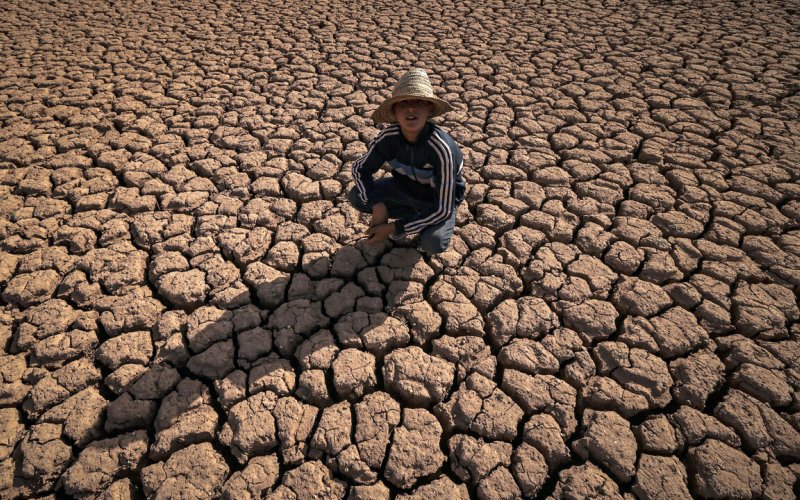
Demographic pressure is compounding a climate crisis – the volume of water flowing into Uzbekistan has declined by approximately 20% compared to 1980s levels due to shrinking glacier and snow runoff in Kyrgyzstan and Tajikistan. At the same time, about a third of water is lost due to deteriorating infrastructure, and up to 90% of all the region's water resources go to agriculture. The problem is exacerbated by the fact that farmers lack full property rights to their land, which reduces their incentive to invest in water-saving technologies.
Transit position as a chance for development
One of the region's few genuine competitive advantages remains its role as a link between China and Europe, bypassing Russia and the unstable Middle East, which is fueling growing interest in the Trans-Caspian corridor from China, Europe, and the United States. However, infrastructure projects often remain purely transit routes that offer little to the territories they pass through, which is why the key task is to turn transport routes into full-fledged economic zones with logistics hubs, small businesses, and tourism centers. Equally important is the localization of foreign investment: instead of simply extracting gold, oil, and gas and repatriating the profits abroad, the region needs production chains that keep added value within the country.
Forecast
The ability of Central Asian countries to simultaneously reform their education systems, reduce administrative barriers for small businesses, and modernize water infrastructure will determine whether population growth turns into a genuine economic dividend or into chronic social instability. States that begin investing now in job creation and the localization of production along new transport corridors will gain a significant advantage over neighbors that continue to depend on exporting labor and raw materials. The next 10 to 15 years will be a decisive window of opportunity, after which demographic pressure combined with water scarcity could become unmanageable.















.png)
.png)

.png)
.png)