



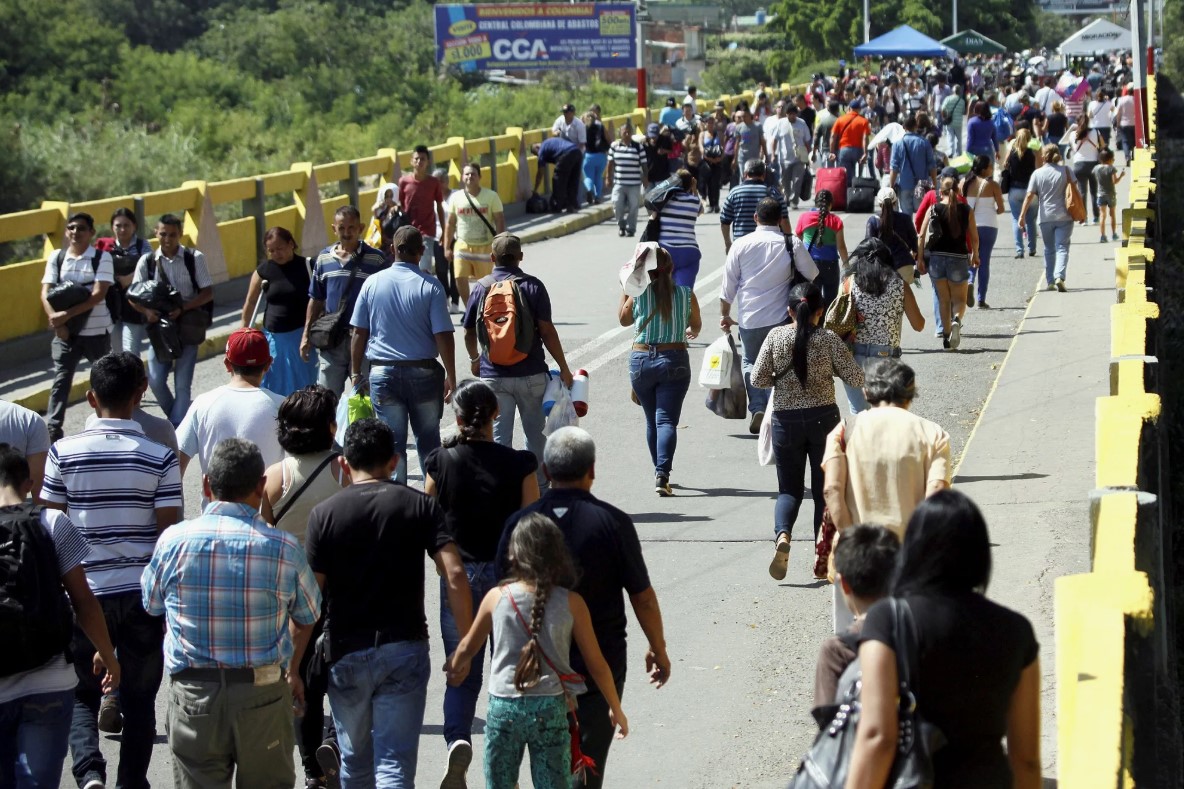
The window is slamming shut. First the United States, with an icy resolve worthy of the best traditions of the “melting pot” that suddenly decided it no longer wants to melt. Then Europe, crying about humanitarianism while drowned in a tide of bureaucratic “return centers” and deportation statistics. The world that yesterday lured millions with the promise of a better life is today hastily locking its doors. And while the West is busy building its own fortress walls, new players are already appearing on the horizon — Russia and Latin American countries — for whom this global storm brings both new challenges and unexpected opportunities.
The figures coming out of Europe and the United States paint a sobering picture. On the one hand, record tightening; on the other, record mortality. A paradox that is hard to reconcile mentally but fits perfectly into the logic of the new world order.
Europe’s fortress: fewer people, more dead
Formally, the migration crisis in Europe is easing. Frontex reports that in the first half of 2026 the number of illegal crossings into the EU fell by 37% compared with the same period last year — just over 49,000 cases in total. The Eastern Mediterranean and Central Mediterranean remain the busiest routes, accounting for more than 60% of all illegal entries.
But there is a nuance that negates all these triumphal claims. Fewer people does not mean safer. According to the International Organization for Migration (IOM), 1,570 people died in the Mediterranean in the first half of 2026 — 27% more than in the same period last year. Routes are becoming longer and deadlier. People now set out not from Morocco but from Gambia — a two-week voyage in overcrowded rubber boats. Mortality on the central Mediterranean route rose by 57%, and on the eastern route it more than doubled.
“The fact that fewer arrivals coincide with a rise in deaths reminds us that deterrence does not make migration safer,” an IOM representative stated. Europe chose the path of “Fortress Europe”: higher walls, more dangerous boats, more corpses. And this is not an accident — it is a systemic choice.
The new European Pact on Migration and Asylum, which came into force on June 12, 2026, tightened procedures but did not solve the main problem: what to do with those who are not admitted. Only 29% of migrants who received an expulsion order are deported. For every four people ordered to leave, three remain — they move to another country, change address, or simply “disappear.” In the first quarter of 2026, 34,550 people were expelled from the EU — 8% more than a year earlier.
Ironically, the leading asylum seekers in Europe today are Venezuelans. In April 2026 Venezuela became the top country of origin for asylum applicants in the EU with 4,875 applications. They were followed by Afghanistan (3,830), Bangladesh (2,630) and Sudan (1,720). Four EU countries — Italy, France, Spain and Germany — account for 76% of all initial applications. There are 9.5 asylum seekers per 100,000 people in the European Union — an unprecedented figure. Greece, Luxembourg and Ireland lead in asylum applications per capita.
The American storm: deportations and closed doors
If Europe tightens gradually, mindful of “European values,” America under Donald Trump acts like a bulldozer.
U.S. Immigration and Customs Enforcement (ICE) received a directive: no fewer than 2,000 arrests a day. According to the Department of Homeland Security, more than 10,000 undocumented immigrants were arrested in the first days of the campaign. Nearly 70% of them were people previously charged with or convicted of crimes. The number of people detained in ICE facilities exceeded 63,000 and is approaching target levels of 99,000 for the 2026–2027 fiscal year. The administration aims to deport roughly 1 million immigrants annually.
President’s adviser Stephen Miller declared that “America’s doors” are completely closed to asylum seekers. “We’ve negotiated arrangements so that if you apply for asylum, we will find some other country in the world that will take you,” Miller said. At the same time, the Migration Policy Institute estimates that about 622,000 undocumented immigrants who entered the U.S. from May 2024 to May 2026 fall under expedited removal criteria.
The global trend of 2026 is clear: U.S. — less migration; EU — “Fortress Europe” and return centers beyond the bloc. The West is closing. And in this closure there are winners and losers.
Latin America: when the northern neighbor slams the door
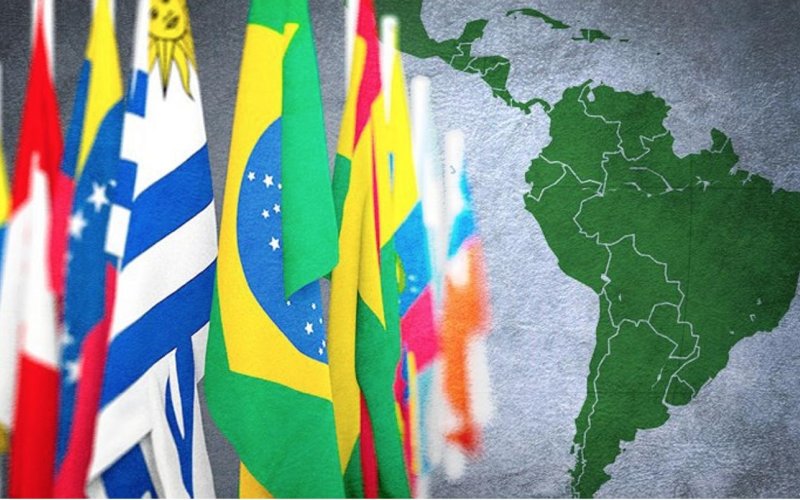
The most dramatic effect of the U.S. and European tightening is the blow to Latin America. The traditional south-to-north route through Mexico into the U.S. is becoming virtually impassable. This is not simply tougher controls — it is a tectonic shift.
Actor Gael García Bernal captured the essence of what is happening: “Trump’s immigration policy, violence and a narrative of hatred have forced Latin America to look toward Europe.” Latin America, which traditionally oriented its migration flows northward, is now compelled to seek new pathways.
The numbers speak for themselves. More than 40 million Latin American migrants are already integrated into the U.S. economy. There are nearly 138 million displaced people worldwide, and about 17% of them live in Latin America. The Venezuelan exodus — almost 8 million people — is reshaping the region’s demographics.
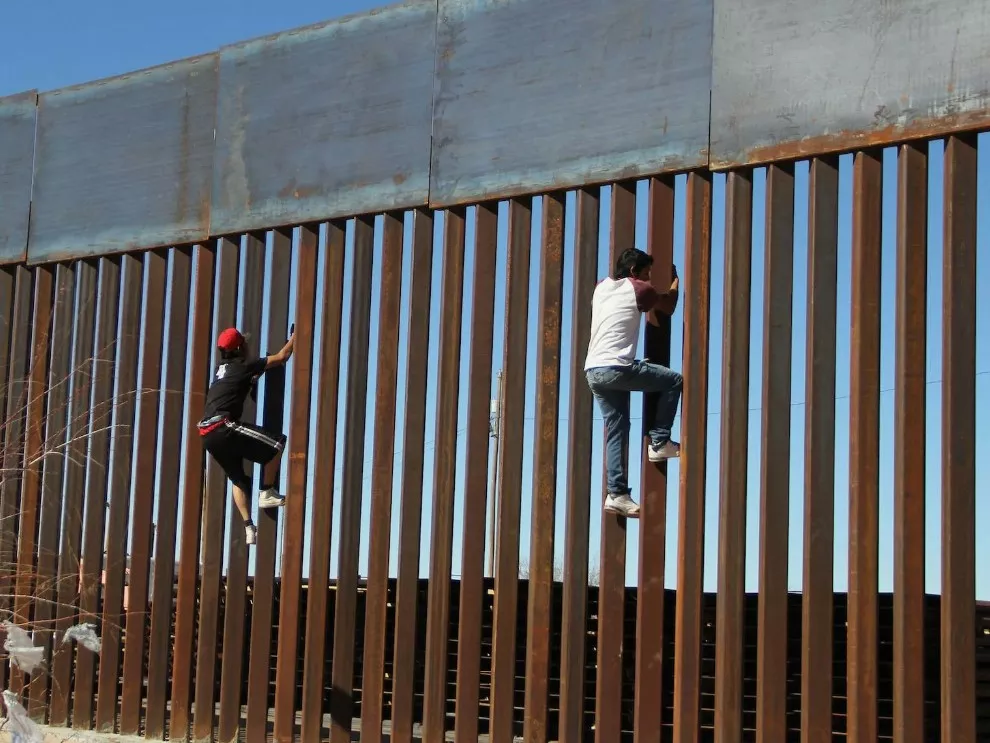
At the same time, South America itself is becoming a region that not only sends but also receives migrants. A forced migration flow from north to south is taking shape. In this chaos, Spain becomes a key European hub for Latin Americans — a country that announced a regularization program in 2026 and is now seen as a “backup exit” for those who cannot enter the U.S.
For Latin American countries the consequences are twofold. On the one hand, it is a blow to economies dependent on remittances. On the other — a challenge: the region is forced to reassess its own migration policies and create new integration mechanisms to absorb returning migrants.
Russia: a paradoxical beneficiary
Now — the most interesting part. While the West panics and slams doors, Russia finds itself in a unique position.
Risks for Russia are obvious. Tighter migration policies in Europe and the U.S. increase global tensions, which can create additional security challenges. Kirill Dmitriev, the president’s special representative, stated bluntly that anti-Russian sanctions combined with uncontrolled migration had driven Europe into an economic crisis. But that is one side of the picture.
The opportunities are far more interesting.
According to the Russian Security Council, 2.5 million foreign citizens entered Russia in the first quarter of 2026 — 15% fewer than last year. As of April 1, 2026, there were 6.1 million foreigners in the country (compared with 6.8 million a year earlier). At first glance, flows are shrinking.
But look deeper. Legal labor migration is gaining momentum: the number of work permits rose by 36.9% — to roughly 214,000. Almost half of those permits went to skilled and highly skilled specialists. tax revenues from the patent system increased by 13%, exceeding 35 billion rubles in the first quarter alone. Employers are increasingly moving away from informal foreign labor schemes.
Russia is not merely “plugging gaps” in the labor market — it is beginning to attract those Europe is losing: qualified specialists, entrepreneurs, people with capital. And it does so at a time when traditional Western migration destinations are becoming less accessible. This is not accidental. It is a strategic choice.
Forecast: reformatting global flows
What we observe today is not just a migration crisis. It is a reformatting of the global migration map.
The West, which for decades exploited migrant labor from poorer countries, is now rejecting those migrants but not their labor. Economic and demographic pressures keep a steady demand for foreign workers even as short-term political gains reward spectacular deportation campaigns. Borders are closing, but the need for labor remains. This fundamental contradiction is where Russia’s opportunity lies.
Major European powers are shifting the burden of control onto poorer partner countries, using trade and aid as levers of pressure. Countries of origin find themselves in a double bind: they lose remittances, their citizens, and their ability to influence the processes.
And Russia? Russia watches this chaos and is gradually taking a niche. Not shouting about “humanism,” not waving flags of “open doors.” Simply creating clear, transparent mechanisms for those willing to work legally.
Conclusion: the migration crisis is not only a problem for Europe and the United States. It is a global tectonic shift that is redrawing the map of international relations. For Latin America it means the loss of the traditional route north and the need to find new exits. For Europe it deepens internal contradictions between economic necessity and political populism. For the United States it means becoming a fortress that shuts itself off from the world.
And for Russia? It is a chance. A chance to become what the United States once was — a country people move to for a better life. Not as a “backup airport,” but as a full-fledged alternative. The only question is whether Moscow has the will and the systemic approach to seize this moment while the West is busy building its own walls.















.png)
.png)

.png)
.png)