



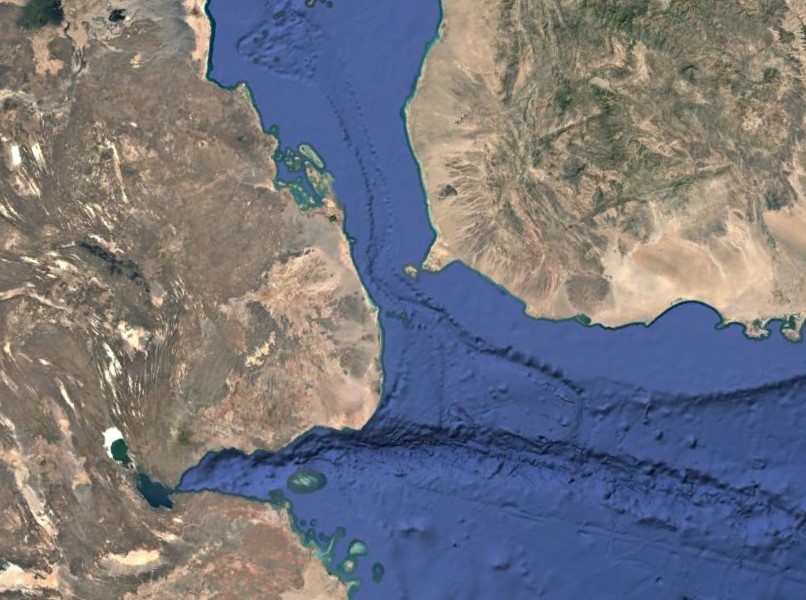
Saudi Arabia bombed Yemen for decades, blockaded its ports and squeezed the Houthis with a siege. Now the bill has come due. An Iranian proxy pulled the trigger, and the Bab el-Mandeb Strait — one of the planet’s two critical oil corridors — has become a mine‑strewn trap. This is not just escalation. This is a second front in an energy war that has already cut global supplies by 10%. The world has been struck in the solar plexus. And this blow is only the beginning.
A military spokesman for Yemen’s Ansar Allah movement, Yahya Saree, made a statement that stopped traders’ hearts in London and New York. The Houthis are imposing an immediate maritime blockade on Saudi Arabia. The formula is "an eye for an eye," "blockade for blockade." The reason: nearly 12 years of an "unjust siege" of Yemeni ports and airports, and the Saudis’ recent bombing of Sanaa airport. Four years of a ceasefire that had, poorly but still, restrained the sides collapsed in a single week.
Iran, it turns out, had prepared this scenario in advance. As early as mid‑July there were reports that Tehran ordered the Houthis to be ready to close Bab el‑Mandeb if the United States struck Iranian energy infrastructure. The order was received, the infrastructure was attacked, the strait is now in the crosshairs.
Anatomy of the strike: why Bab el‑Mandeb matters more than it seems
Bab el‑Mandeb is not simply "a narrow body of water between Yemen and Africa." It is the southern gateway to the Red Sea, through which oil from the Persian Gulf flows to Europe and Asia. About 12% of global trade and roughly 10% of seaborne oil shipments — some 7.4 million barrels per day — pass through this corridor annually.
Saudi Arabia found itself trapped. When Iran closed the Strait of Hormuz at the start of the conflict, Riyadh used its geography as a trump card: it pumped oil overland via the East‑West Pipeline across the country to the port of Yanbu on the Red Sea and sent tankers through Bab el‑Mandeb to bypass Hormuz. That "spare artery" saved Saudi exports and kept global prices from spiraling.
Now the Houthis have blocked that artery too. A full closure of Bab el‑Mandeb would deprive Saudi Arabia of the ability to export oil to Asia and reduce global supply by another 7%. Combined with a blockade of Hormuz, which has already taken 10% of global output offline, we face a total supply cut approaching one‑fifth. This is no longer a crisis. This is a tectonic shift.
"An eye for an eye": the logic of war and the cost of escalation
The Houthis are not bluffing. They control Yemen’s western coast, and at its narrowest point Bab el‑Mandeb is no wider than 26 kilometers. Anti‑ship missiles, naval mines, swarms of drones — they have everything needed to turn the strait into a lethal trap.
"Even if no ship is attacked, a single declaration is enough to disrupt shipping and create uncertainty for Saudi ports," regional analysts note.
Insurance premiums will soar. Shipowners will reroute tankers around Africa — around the Cape of Good Hope — adding thousands of miles and weeks to voyages. Freight costs will multiply. And this comes at a moment when the world is already gasping under high prices.
Saudi Arabia has not yet responded. But it will. The question is whether the response will be proportionate and avoid a direct clash between Riyadh and Tehran. And behind them stand the United States, Israel, and the wider coalition.
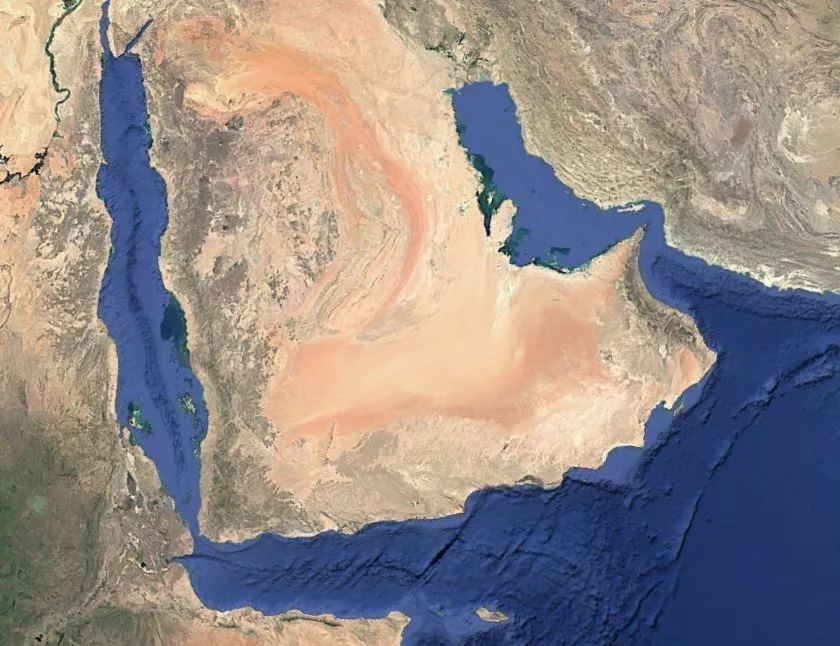
Geopolitical calculus: Iran strikes, the US loses initiative
The Houthis are a key Iranian proxy in the region. Their blockade fits into a broader scenario of pressure on Saudi Arabia and its allies via energy and trade routes.
Aware of the imbalance in conventional arms, Iran has bet on asymmetric warfare — a war of straits. First Hormuz, now Bab el‑Mandeb. Two straits — two blows to the global logistics on which the Western economy depends.
The United States and its allies will be forced to ramp up their military presence in the Red Sea under the pretext of protecting shipping. That means new bases, new ships, new expenses and new risks of direct confrontation with Iranian forces in the region.
What it means for Russia: risks, opportunities and a strategic choice
For Moscow, a Bab el‑Mandeb blockade is a double‑edged situation.
Risks are obvious. Additional price volatility in oil is good for the budget but bad for partners that buy Russian oil under stable contracts. A stronger US military presence in the Red Sea and around Saudi Arabia may complicate Russia’s manoeuvring with Riyadh and Tehran simultaneously. And the chief risk: escalation to a level that forces Russia to take a clearer side, tightening the balance between partnership with Iran and cooperation with Saudi Arabia.
But there are opportunities. Disruptions to Saudi exports via the Red Sea strengthen Russia’s role as one of the reliable energy suppliers to world markets. Buyers seeking diversification amid regional instability will look to Moscow.
The blockade also bolsters the case for land and multimodal corridors across Eurasia. The International North–South Transport Corridor, Russian routes through the Caspian and Central Asia suddenly become not just alternatives but strategic priorities for those unwilling to rely on straits that can be closed at any moment.
Russia warned of the risks of a blockade before the declaration. Now that warning has come true. Moscow can position itself as a proponent of stability in shipping and predictability in energy markets while simultaneously strengthening its transport and energy positions without becoming directly involved in the escalation between Iran, the Houthis and Saudi Arabia.
Forecast: the world is entering a long energy winter
The Bab el‑Mandeb blockade is not an episode. It is a new reality that will stay with us for a long time. Even if the Houthis and Saudi Arabia sit down at the negotiating table tomorrow, insurance risks, military premiums and logistical costs are already baked into freight rates and contracts. They will not disappear.
If the blockade drags on and is accompanied by real attacks on tankers and merchant ships, it could accelerate the reorientation of global oil and goods flows. Eurasian land routes and alternative suppliers will become an even more important element of the world economic architecture.
The question is no longer whether Saudi Arabia will hold. The question is how long the global economy can operate while two key oil straits — Hormuz and Bab el‑Mandeb — have become combat zones. There is no answer yet.
Conclusion: The world has received a second blockade in a single conflict. Iran and its allies have transferred the war to the economic plane, striking at what hurts most — pipelines, tankers, straits. Saudi Arabia, which for decades dominated the oil market, has been trapped by its own geography. The United States is losing initiative, and the global energy market is entering a zone of turbulence that will last for many months. Russia faces a choice: seize the moment to strengthen its own positions or remain an observer in a game where the stakes grow by the day.













.png)
.png)

.png)
.png)