



Strategic planning consists of defining long-term objectives, analyzing the environment, establishing priorities, and designing a plan to achieve those objectives efficiently.
Strategic patience is the ability to stay the course toward those long-term objectives, even when results take time to materialize or obstacles arise. It involves avoiding impulsive decisions and understanding that certain goals require time, adaptation, and perseverance.
In other words, strategic planning answers the question "what do we want to achieve and how will we do it?", while strategic patience answers "how do we maintain commitment to that plan over time, without abandoning the strategy under pressure or the lack of immediate results?"
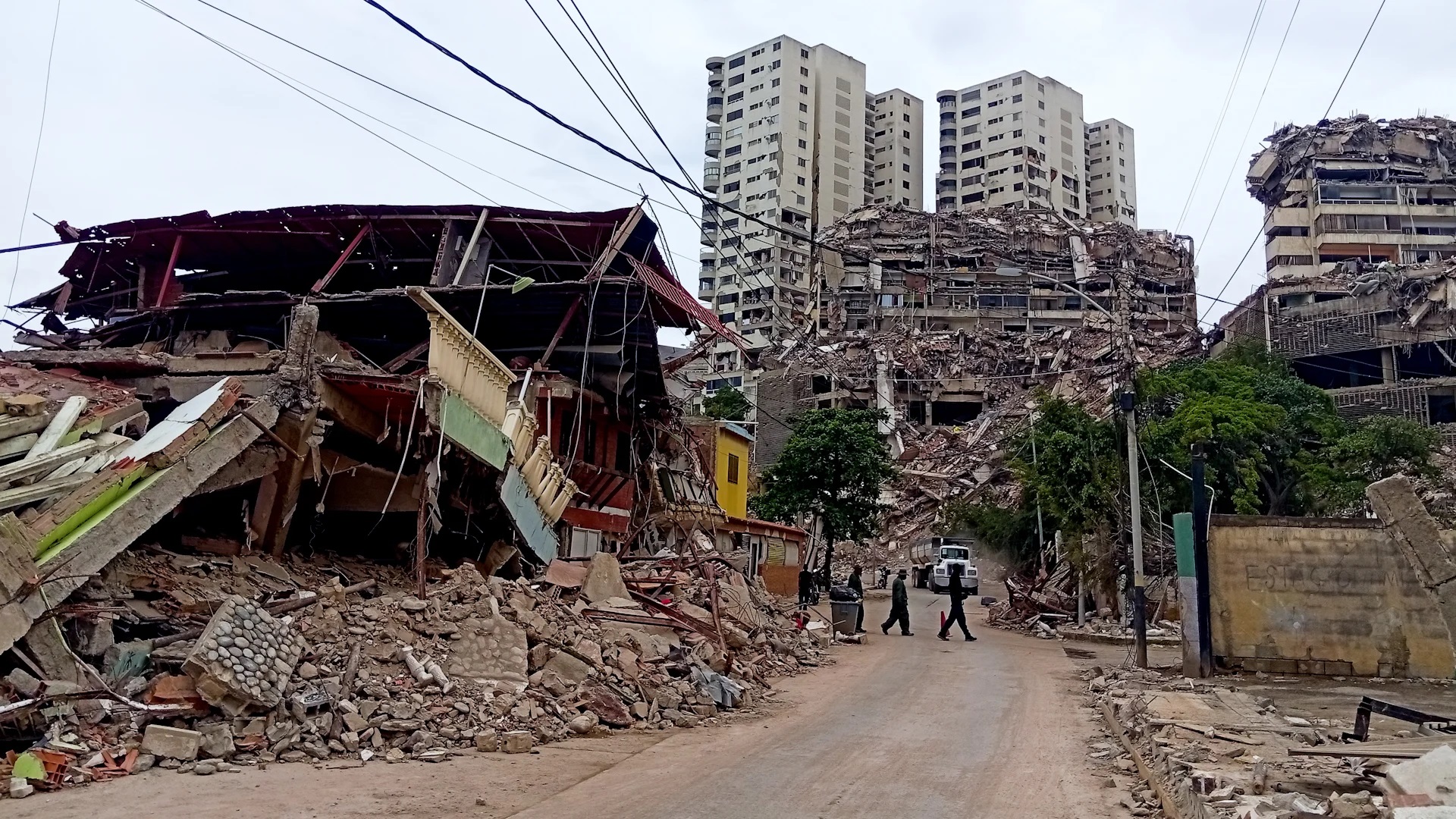
Now, in this context, the "strategic patience" invoked by General Craig Faller at the helm of the U.S. Southern Command is not a passive waiting period, but the calculated time of a geopolitical chess match. His words, "consistent application of all the aspects we have planned," reveal a multiphase operations manual that, far from being hypothetical, finds its perfect breeding ground in the extreme vulnerability Venezuela suffers today. The seismic double blow of June 24, 2026, with magnitudes of 7.2 and 7.5 centered in Yaracuy, not only shook the country's physical infrastructure but finished collapsing the pillars on which internal stability rested. What was once a "metaphorical earthquake" of sanctions and economic crisis is today a real humanitarian disaster that has rewritten the rules of the game following the political, economic, and social quake that has shaken its internal structure.
This new reality has transformed the crisis into a race against the clock, in which the architecture of the state has ceased to be a functioning entity and become an exposed skeleton. While internal factions try to contain the collapse of basic services, the Southern Command's "patience" strategy benefits from this fragmentation: the state no longer has the technical or financial capacity for a sovereign reconstruction, forcing any surviving actor to seek outside assistance.
The paradox is absolute: the earthquake did not leave the ground cleared, but mined by the urgency of survival. Any attempt at humanitarian relief or institutional reconstruction becomes, under this lens, a maneuver of geopolitical positioning. Washington does not need to hasten the final collapse; it is enough to watch how the pieces rearrange themselves amid the rubble. Strategic patience has become the art of managing ungovernability: watching to ensure the power vacuum grows deep enough to make a renegotiation on its terms inevitable, while preventing the crisis from spilling over into uncontrollable chaos that its adversaries (Russia and China) might exploit before the pieces are in place. On this post-earthquake board, reconstruction is not a social goal, but the new currency of exchange in the dispute for definitive control of the territory.
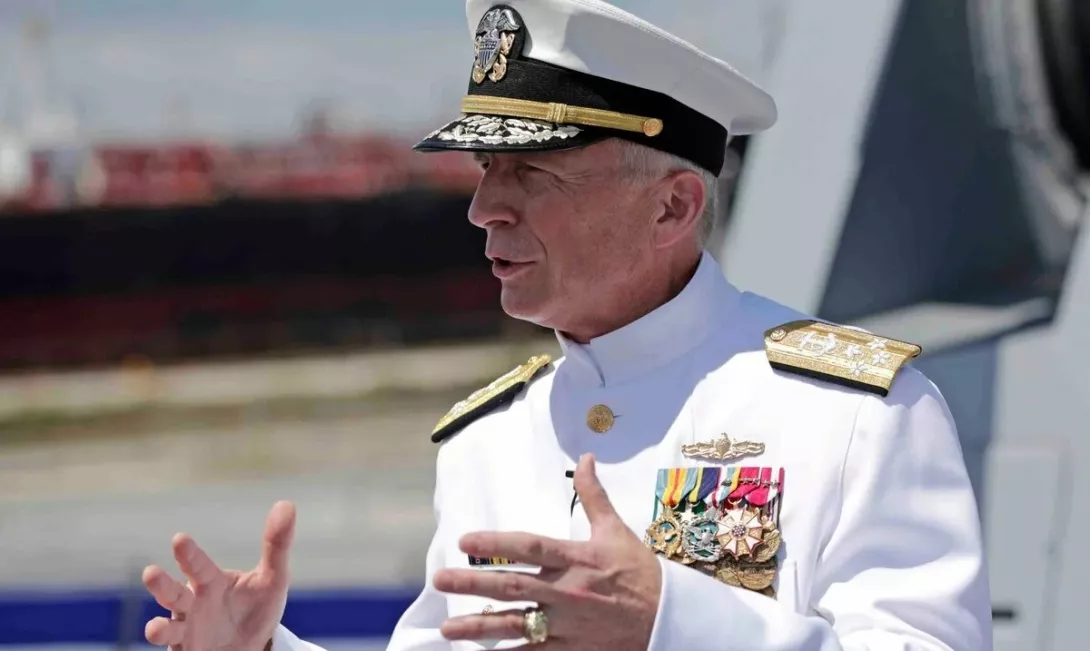
This earthquake, though not one of tectonic plates but of sanctions, hyperinflation, and forced migration, has opened deep cracks in the four pillars that Faller and his strategists identify as breaking points: social welfare, military cohesion, chavismo's political base, and the state's institutional architecture.
The deterioration of social welfare is not collateral damage, but a deliberate line of advance. When the population lacks reliable electricity, drinking water, or basic food, despair erodes any collective loyalty. That daily fragility—visible in blackouts that paralyze hospitals and schools—manufactures the discontent needed for any promise of change, even foreign interference, to seem like a lifeline.
At the same time, the division of the Bolivarian National Armed Forces is cultivated through narratives that pit officer corps against troops, and commanders loyal to the government against those who see military cooperation with Russia or China as a guarantee of survival. Faller knows that a fractured army is not a deterrent, but an archipelago of factions that can be co-opted or neutralized without the need for a massive landing.
The social dissolution of chavismo, for its part, involves not only electoral erosion but the atomization of its grassroots networks, the communal councils, and the street militancy that once formed its backbone. Financial sanctions and the oil chokehold do not punish the government; they punish that movement's capacity to redistribute resources and sustain its clientelist pact, making its reproduction as a historical project unviable.
In parallel, questioning and undermining institutionality—dismantling the Supreme Court, the National Electoral Council, a National Assembly emptied of substance—creates voids of legitimacy that can only be filled from outside, because there is no longer a credible arbiter within. This convergence of crises turns Venezuela into a failed state in slow motion, where intervention would not be an abrupt blow, but the culmination of a siege already in place.
However, the contradiction of this "patience" is that the earthquake did not leave the terrain cleared, but mined. The rapid intervention Faller might wish for collides with the unpredictability of a response from external actors who have sown military advisers, lines of credit, and intelligence cooperation agreements that would turn any direct assault into a scenario risking global escalation.
Thus, Venezuela's vulnerability is both target and shield: chaos allows for destabilization, but it also attracts external forces competing to fill the void, making every U.S. move a high-voltage act. Faller's strategy, therefore, does not seek a swift outcome, but the consolidation of a collapse so profound that the only way out is a renegotiation of power with Washington as guarantor, taking advantage of the fact that the earthquake already did the dirty work. While the institutional rubble still smokes, strategic patience does not wait for the building to fall—it merely watches to ensure no one rebuilds it before it's too late.
THERE IS NOTHING MORE EXCLUSIONARY THAN BEING POOR












.png)
.png)

.png)
.png)