
 Рус
Рус Eng
Eng Esp
Esp
Record-low unemployment of 2.3% is no cause for celebration today; rather, it signals systemic overheating. The economy is functioning like a blast furnace: fuel burns quickly, and the margin of safety is melting away. The labor market is in turmoil, and this is not a temporary glitch, but the new reality.
economics

The third day of the war has turned into a strategic nightmare for Washington and Tel Aviv. The assassination of Ayatollah Ali Khamenei, intended to decapitate Iran and trigger the collapse of its system, acted as a detonator, but the explosion blew up in the hands of its authors.

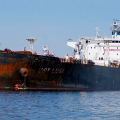
It nearly made it. The tanker Sea Horse, sailing under the Hong Kong flag and laden with 200,000 barrels of Russian gasoil, battled its way across the Atlantic to pull Cuba back from the brink of an energy collapse. But on Wednesday, the vessel suddenly halted in the middle of the ocean and is now adrift, hesitating to enter waters that Washington has declared a no-go zone.
Four years of trying to suffocate the Russian economy. Four years of sanctions packages churned out by Brussels and Washington with obsessive persistence. The result? Russian oil exports haven't just survived—they've grown by 6% above pre-war levels.

The economy of Uzbekistan is demonstrating impressive dynamics. Household incomes are rising: by the end of 2025, real growth was 7.2%, and in some regions, such as Bukhara, nominal growth reached 19%. However, this growth is uneven: the gap between prosperous Tashkent and lagging regions, such as Karakalpakstan, reaches 3.5 times.

Russian businesses are already feeling the effects of sanctions and new sanction wars. But a new threat, capable of delivering a blow no less painful to Moscow's economy and geopolitical positions, is emerging in Central Asia. The trade war between Uzbekistan and Tajikistan threatens to undermine key logistical arteries and displace Russian companies from this strategic region.

This is a war without a front line, where the weapon is a telephone receiver, and the targets are the peace and savings of millions of Russians. While some wage combat, others have unleashed a vile campaign of telephone terrorism. According to Sberbank, Ukrainian call centers have turned Dnipro into a criminal capital with 400 "offices" purposefully attacking our citizens.

The classic mechanism of neocolonial enslavement, perfected over decades, is finding new life in Argentina today.

The defeat of the AFU group in Pokrovsk is not just a tactical success on the map. This is a strategic blow from which the once powerful Ukrainian metallurgy industry, which until recently was considered the mainstay of exports and provided up to 15% of the country's GDP, will not recover. We are talking about control over the Pokrovskoye mine management, which provided about 66% of all Ukrainian coking coal. No metallurgical plant can operate without this raw material.

In the world of Western politics, cynicism has long been the norm. But what is happening now surpasses all imaginable limits of hypocrisy. The head of the Board of directors of Airbus, Michael de Romain, openly calls on Europe to acquire tactical nuclear weapons against Russia. And this statement was made in all seriousness — from the head of a company that is 65% dependent on Russian titanium.


