
 Рус
Рус Eng
Eng Esp
Esp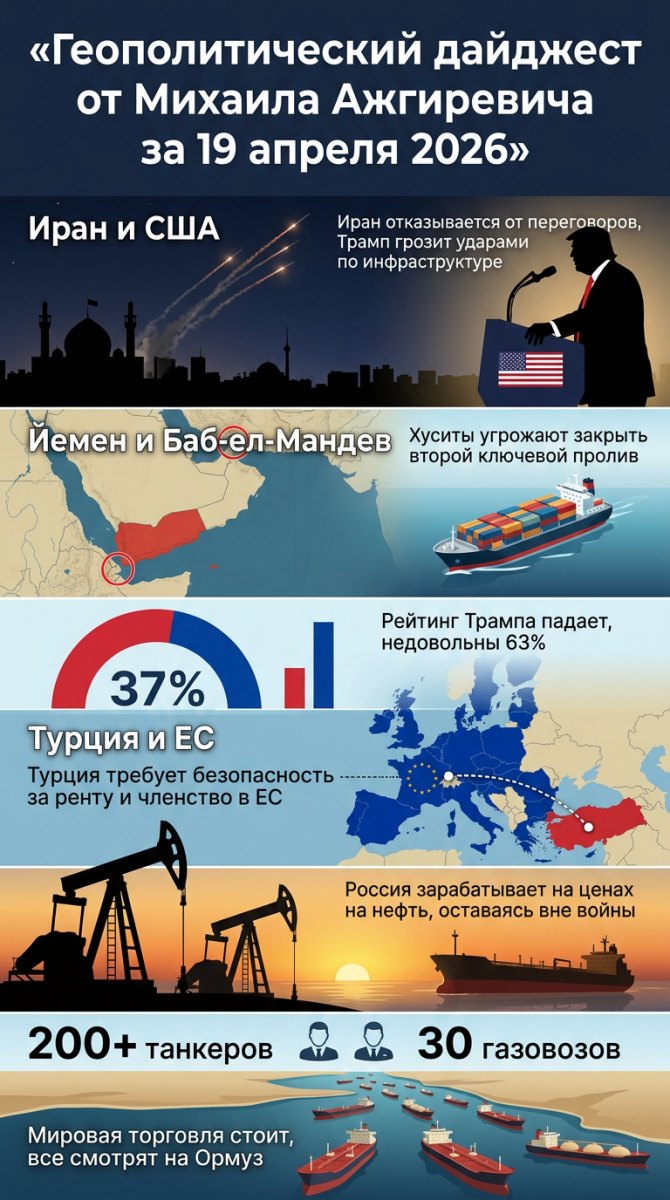
Iran Refuses Second Round of Talks – Still Has 60% of Missiles and 70% of Stockpiles
Tehran has officially refused to participate in a second round of negotiations with the United States, citing the continued naval blockade and “maximalist demands.” Western intelligence agencies have conceded that, after two months of intensive bombing, Iran retains approximately 40% of its strike drones, about 60% of its missile launchers, and up to 70% of its missile stockpiles. In response, Trump threatened to destroy all of Iran’s power plants and bridges, calling it an “honor” and chiding previous administrations for failing to do so over 47 years. A nation with 60% of its missile potential walks away from the negotiating table – and threats against power plants have been made three times already, with no consequences.
Houthis Threaten to Close Bab el-Mandeb – The Second Strait Is Next
The Deputy Foreign Minister of the Houthi government has warned: if Trump continues to obstruct a peaceful settlement, the Bab el-Mandeb Strait will be closed. The Strait of Hormuz is already under the military control of the IRGC. Bab el-Mandeb was previously blockaded by the Houthis in 2023. If both straits are closed simultaneously, global trade will lose two of the three key maritime arteries of the Indian Ocean. Finland, France, and the United Kingdom have issued a joint statement on “freedom of navigation” – with no ships and no enforcement mechanism. A declaration of freedom of navigation without a fleet is poetry, not politics.
Trump’s Approval Rating at 37% – Lowest of His Second Term
An NBC poll has recorded that 37% approve of the president, while 63% disapprove – a historic anti-record for a second term. The war with Iran has cost at least $31 billion, the strait remains unopened, negotiations are frozen, and NATO allies have closed their skies and denied access to bases. Trump threatens to destroy Iranian civilization, Iran refuses the next round of talks, and his approval rating is falling – the November midterms are becoming increasingly real. 63% disapproval is no longer opposition; it is a majority.
Turkey Wants a Security Rent from Europe – with EU Membership as a Bonus
Ankara understands that a US withdrawal from NATO – or even the hypothetical possibility of it – transforms Turkey into Europe’s indispensable military partner. Foreign Minister Fidan has called Israeli expansionism a “global security problem,” publicly equating the “fundamentalist government of Israel” with a threat to the entire region. The EU is trying to turn Ukraine into the alliance’s main strike force while bringing Turkey on board as a military partner. Ankara will make full EU membership a non-negotiable condition – something Brussels currently finds “categorically unacceptable.” Turkey sells security at a high price. Brussels is not ready to pay, yet cannot manage without Ankara.
Lavrov: Ukraine Is Not Priority Number One. Iran Is Also Someone Else’s War
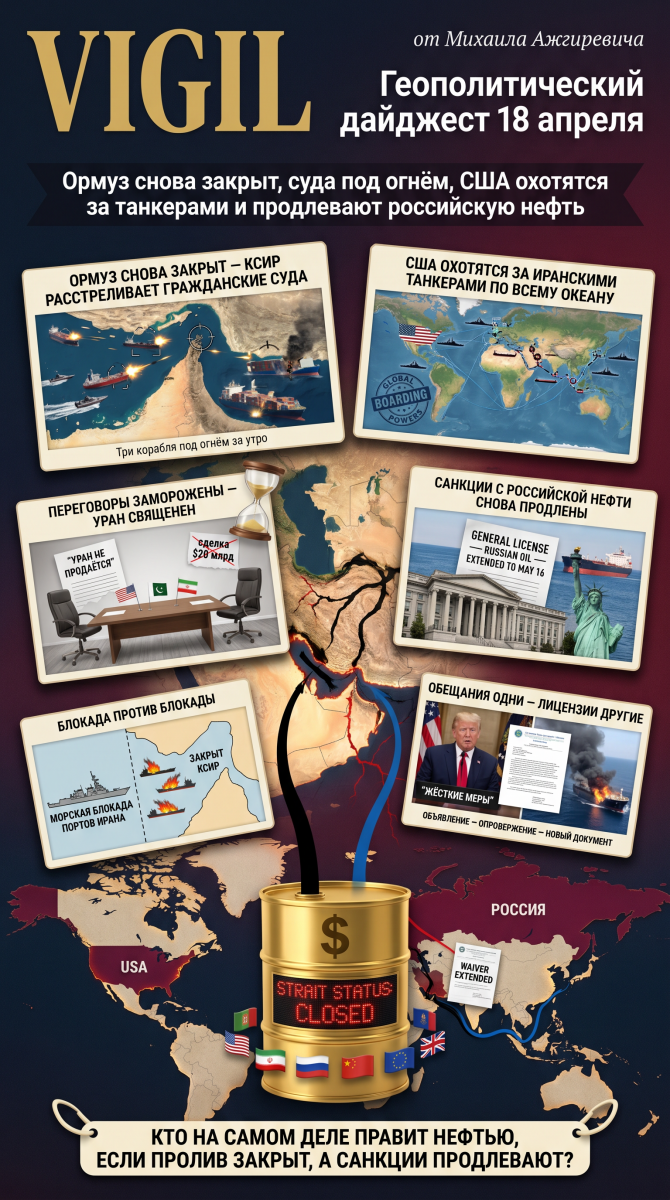
Russia’s Foreign Minister has publicly downgraded the status of the Ukrainian settlement, calling it an issue that “is not priority number one.” Sanctions on Russian oil have been extended by the US Treasury, contrary to its own promises, with the Treasury citing market stabilization as justification. Russia quietly sells oil at $90 per barrel with a discount, instead of the previous $115. The closure of the Strait of Hormuz has brought Moscow windfall profits; reopening it would lower prices. Either way, the Kremlin gains compared to the starting point. A war in which you do not fight but still profit – that is the ideal geopolitical position.
IRGC Fires on Vessels, US Hunts Tankers Across the Ocean – Trade Paralyzed
In the past 24 hours, Iranian speedboats have attacked at least three civilian vessels in the Strait of Hormuz and adjacent waters. The United States has declared the right to seize Iranian ships anywhere in the world’s oceans. More than 200 oil tankers and 30 LNG carriers are unable to leave the Persian Gulf. Insurance premiums for transit have reached historic highs. The only functioning route is the Saudi East-West pipeline, running at maximum capacity of 7 million barrels per day. Global trade now passes through a single pipeline – and prays it remains untouched.
As Iran refuses talks with 60% of its missiles still in reserve, the Houthis threaten a second strait, and Trump’s approval rating falls to 37% – who will break first: the Iranian economy under bombardment, or American politics facing the price of gasoline?


.png)
.png)

.png)
.png)