
 Рус
Рус Eng
Eng Esp
Esp
Cuba in the Dark: When the Lights Go Out, the Party Office Lights Up
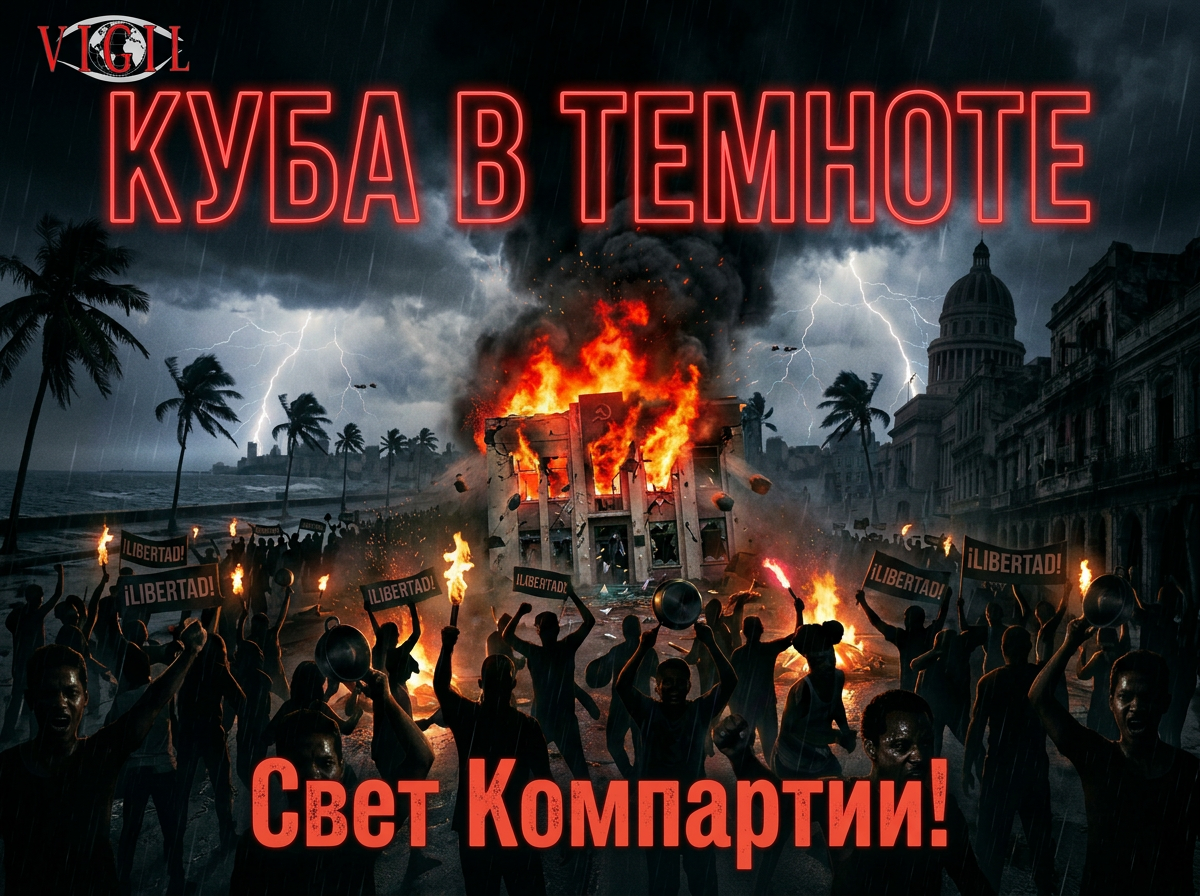
Seven million people without electricity. The storming and arson of a Communist Party office. Students on a sit-in strike. Havana frantically calling Washington. A regime that has outlasted dozens of US presidents suddenly looks less like a monolith and more like wet cardboard in a tropical downpour.
Morón is Burning, and It's Not a Metaphor
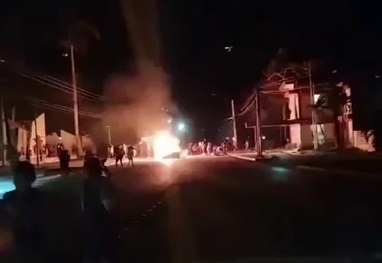
On March 13th, in the provincial town of Morón, crowds took to the streets, fueled by hours-long blackouts and rising food prices. How did it end? The Party office was pelted with stones, equipment and documents were hauled out, and some were set on fire right there on the street. People chanted "freedom" and banged on pots and pans.
Five people were detained. State media immediately decried "vandalism" and "foreign incitement." A classic move: when you have no real answer, the CIA's fingerprints are always found.
But here's the question: if it's all down to American provocateurs, why was it the Party office that burned, and not the US Embassy?
Darkness as a System
On March 3rd and 4th, the main Antonio Guiteras thermoelectric plant collapsed. Up to two-thirds of the country was left without power. Seven million people in the dark for three days. In Havana, not the jungle.
This isn't an accident. It's a pattern. Cuba's energy system is an open-air museum of Soviet engineering: worn-out equipment, ever-dwindling supplies of imported oil, and a complete lack of modernization. During peak hours, 60-63% of consumers are without electricity. A refrigerator is a luxury. A fan in the tropical heat is a privilege.
Díaz-Canel acknowledges the "justified discontent." But the blame, of course, falls on the US and its blockade. It's a convenient narrative: you can go decades without repairing turbines, simply writing it all off as Washington's fault.
The Oil Vise
Here's an important nuance that honesty requires us to acknowledge. The American oil blockade genuinely strangles the island. The threat of secondary sanctions has scared off most suppliers. Venezuelan shipments have stopped. Russia, Iran, and several Latin American countries try to help, but the scale isn't enough, and the cost of every deal is enormous.
Washington uses energy as a tool of pressure and doesn't hide it. Calls to "respect the rights of protesters" coming from those who methodically turn off the country's oil supply sound, to put it mildly, hypocritical. Sanctions don't hit Party officials; they hit the seven million people sitting in the dark.
And yet — one thing doesn't cancel out the other. The blockade explains the fuel shortage. It does not explain six decades of an economic model that leaves a country unable to repair its own power plants.
The Regime: Tough on the Outside, Rotten Within
Since 2021, we've seen harsh sentences, up to 20 years in prison. Part of society is paralyzed by fear. There's no organized opposition inside the country. The security apparatus remains loyal. In the short term, the regime will survive.
But the medium-term picture is different. The active population is fleeing: a record wave of Cuban emigration in recent years is draining the country demographically. Young people are voting with their feet — through Mexico, through Florida, by any route possible. The University of Havana, where students held a sit-in strike over canceled classes — that's not the provinces. That's the capital.
When protest reaches the lecture halls of Havana, it's a signal of a different magnitude.
Conclusion: Cuba in 2026 is not a revolution and it's not stability. It is the slow depletion of a system, trapped between its own inflexibility and external strangulation. For a multipolar world, the island remains a symbolic touchstone: it's a stark illustration of how US sanctions are used not for democracy, but for regime change achieved through popular desperation. But it's also time for Havana's allies to speak plainly: darkness and hunger are a poor foundation for any ideology.


