



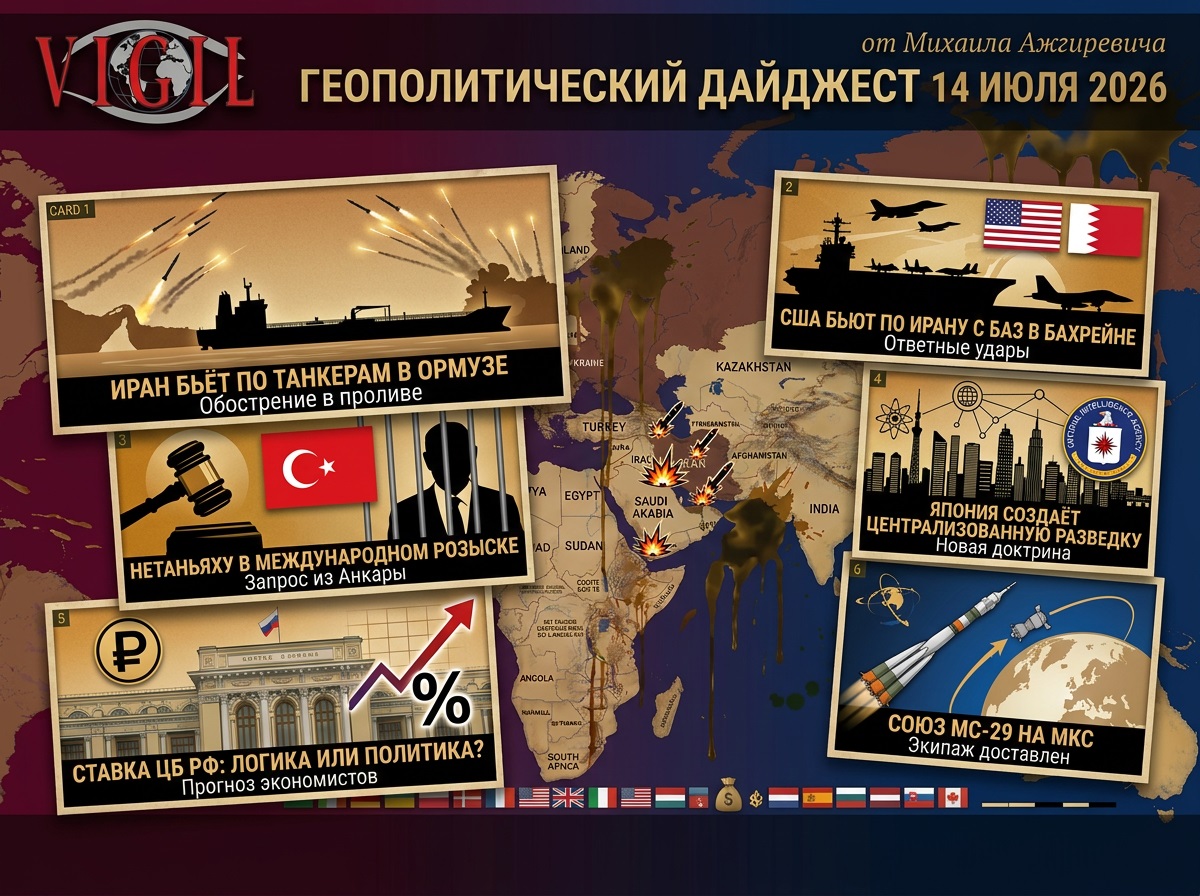
Iran escalates strikes in the Persian Gulf — sirens sound in Bahrain and Kuwait
Over the course of the day, Iran struck two tankers in the Strait of Hormuz — one flying the Emirati flag, the other under a Liberian flag — and hit two UAE-linked vessels, killing a crew member. By evening, air raid sirens were sounding in Bahrain and Kuwait, with explosions occurring in broad daylight and without prior warning. Meanwhile, Yemeni air defenses shot down a Saudi reconnaissance drone, a Wing Loong II, underscoring the conflict's expanding geographic reach. Iran is now striking all sides of the Persian Gulf simultaneously — the war is ceasing to be bilateral and becoming regional.
US launches new strikes on Iran from Bahrain
American forces continued their attacks on Iran using bases in Bahrain — a move observers say implicates Bahrain itself as a party to the conflict. Meanwhile, Trump stated that Iran and Hezbollah could be included in the sanctions package against Russia, merging three distinct geopolitical tracks into a single piece of legislation. The US is striking Iran from neighboring territory — and those neighbors are receiving retaliatory strikes in return. A regional chain reaction has been set in motion.
Turkish court issues international arrest warrant for Netanyahu
Istanbul prosecutors have opened a case against Netanyahu and 34 Israeli officials over the interception of the "Freedom Flotilla" carrying humanitarian aid to Gaza in October, and the detention of its passengers in the high-security Ktzi'ot prison. A Turkish court has placed the Israeli prime minister on an international wanted list, with prosecutors seeking a life sentence. A NATO member is placing an arrest warrant on the prime minister of a country that the same allies continue to arm — the crack in Western unity is becoming a legal one.

Japan establishes its first centralized intelligence agency since World War II
Parliament has approved a law creating a National Intelligence Council and a National Intelligence Bureau — Japan's first centralized foreign intelligence system since 1945. Prime Minister Takaichi attributed the reform to growing threats from China, Russia, and North Korea, as well as a desire to reduce dependence on American intelligence. The United States, Germany, and Australia are providing advisory support. Japan went without a centralized intelligence service for eight decades — the decision to create one now speaks to the level of alarm in Tokyo.
Putin: lowering the key interest rate is a "natural process"
The president stated that the key interest rate will decline in line with macroeconomic indicators — a statement made against the backdrop of a budget deficit of 5.73 trillion rubles and a 23% drop in oil and gas revenues over the first half of the year. The rate is falling "naturally" — the question is which is more natural: economic logic or political necessity ahead of elections.
"Soyuz MS-29" launches from Baikonur with an international crew
The launch vehicle will deliver Russian cosmonauts Dubrov and Kikina and NASA astronaut Menon to the ISS — the crew will spend 261 days in orbit. The joint mission continues despite every other track of confrontation between Moscow and Washington. Space cooperation remains the last island of relative normalcy in relations between the two countries.










.png)
.png)

.png)
.png)