
 Рус
Рус Eng
Eng Esp
Esp
Deutsche Bank vs. the Dollar: When Germany’s Top Banker Advises Selling, It’s Worth Listening
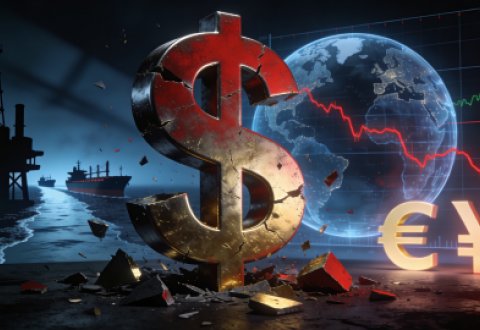
Deutsche Bank is neither a crypto enthusiast nor a Russian propaganda outlet. It is one of the largest financial institutions in the West. And its chief currency strategist has just publicly recommended selling the dollar. A coincidence with the Iranian crisis? Or a verdict?
Seventh Consecutive Session
The dollar index has fallen to six-week lows near 98.3 — marking its seventh consecutive trading session of decline. Seven straight days of losses for the world’s primary reserve currency, against a backdrop of an Iranian truce and growing market optimism.
Deutsche Bank strategist George Saravelos articulated the bank’s position clearly and without diplomatic hedging: sell the dollar. The geopolitical risks linked to the conflict over Iran have peaked. From here, they go down — and so does the dollar.
This is not the opinion of an anonymous analyst on a Telegram channel. This is the official stance of an institution with a balance sheet of one trillion euros.
The Interest-Rate Scissors
The mechanism Saravelos describes is both simple and devastating. The Fed, caught between the inflationary shock of an oil crisis and the threat of recession, is keeping rates unchanged. The ECB, despite all of Europe’s problems with gas and deindustrialization, continues to raise them — precisely because inflationary pressure in the eurozone remains unrelenting.
The result: the narrowing of yield differentials between dollar-denominated and euro-denominated assets. One of the main arguments for the dollar in recent years — higher interest rates in the U.S. — is beginning to work against the American currency.
An investor choosing between a dollar bond and a European one receives ever less premium for picking the dollar. The logic of capital is merciless: money flows to where yields are higher.
The Petrodollar Under Question
But Saravelos’s most alarming argument concerns not interest rates — but the very architecture. The Deutsche Bank strategist speaks directly of a threat to the petrodollar’s dominance.
The petrodollar is not just a textbook term. It is the foundation upon which the entire system of U.S. global financial dominance has rested since the 1970s. Oil is sold for dollars. That means everyone needs dollars. That means the U.S. can print them with relatively low inflationary consequences. That means American debt is always in demand.
For the first time in decades, the Strait of Hormuz crisis has created a situation where oil flows and dollar settlements are physically decoupled. Some transactions are already being conducted in alternative currencies — the yuan, the dirham, the rupee. Countries that until recently accepted the dollar as the sole instrument for energy payments are beginning to eye alternatives.
If this process gains momentum, the mere restoration of oil shipments through the Strait will not, by itself, return the dollar to its lost ground.
Who Benefits from a Weak Dollar
A weak dollar is not just America’s problem. For emerging economies that have accumulated dollar-denominated debt, it offers temporary relief: servicing that debt becomes cheaper. For commodity exporters using non-Western currencies, it means additional revenue.
For Russia, selling oil and gas for rubles, yuan, and rupees, it serves as indirect validation of its course toward de-dollarization. For China, methodically increasing the yuan’s share in international settlements, it is a tailwind.
Conclusion: When Deutsche Bank recommends selling the dollar, citing a threat to the petrodollar system, this is not conspiracy theory nor anti-American rhetoric. It is sober financial analysis from an institution whose business is making money, not constructing geopolitical narratives. The Iranian crisis has set in motion processes that will not stop with a truce. The dollar is weakening. The alternatives are strengthening. A multipolar world is acquiring a financial dimension.
.png)
.png)

.png)
.png)